
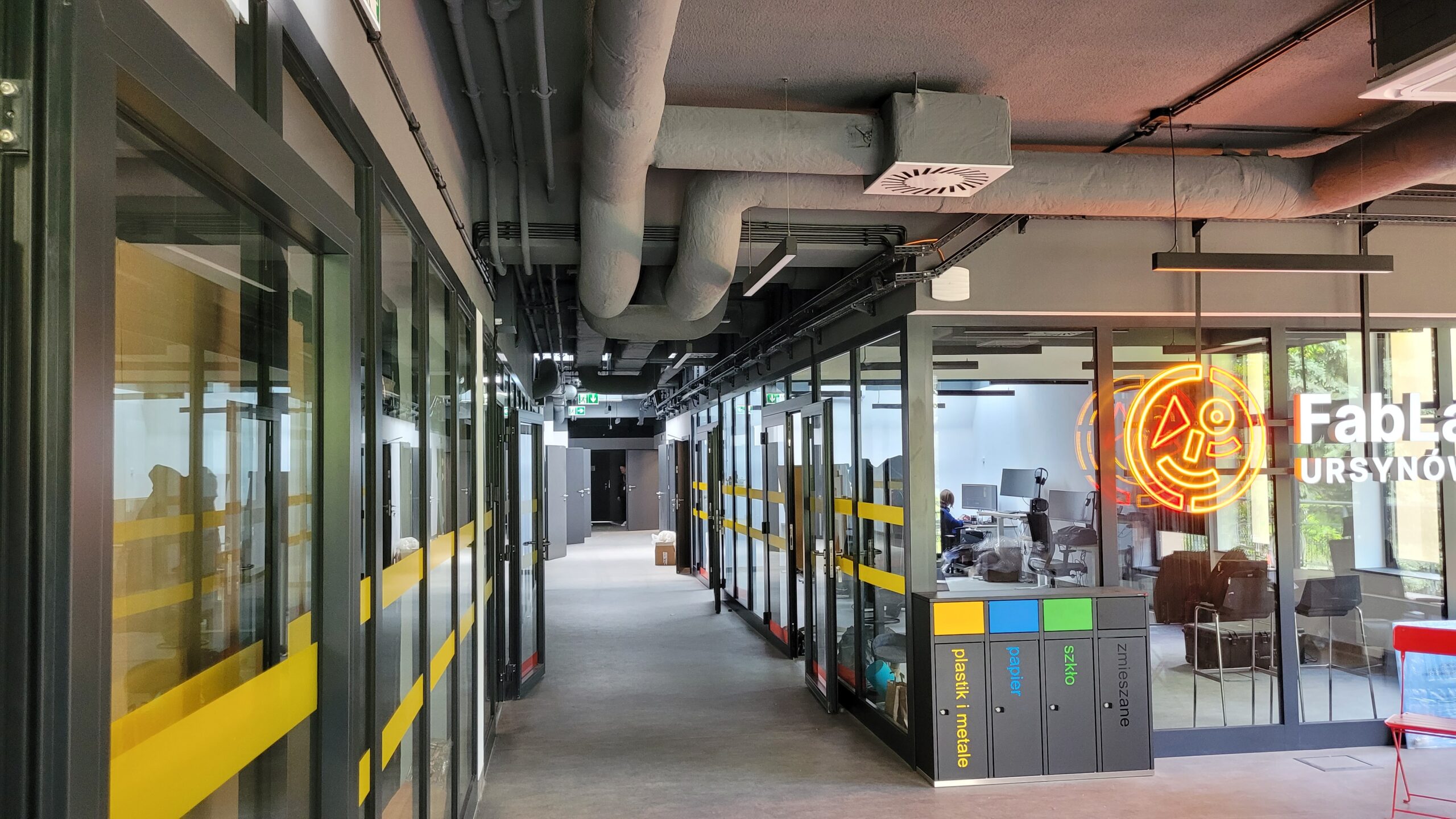
We install VRV and VRF air conditioning systems for businesses and investors in Warsaw and throughout Poland. This type of installation is used to air-condition large buildings divided into many rooms, allowing the right microclimate to be created in each individual room.
Installing a VRV or VRF system solves the air-conditioning challenges of multi-storey buildings. The operating principle is fairly simple: a single outdoor unit typically serves up to 64 indoor units, and by combining several outdoor units into one system, as many as 200-250 units can be connected within a single facility. As a result, VRV or VRF systems help maintain optimal climate conditions in offices, shopping centers, stores, etc., even when located in the same building. We handle full project delivery – from design, through equipment supply, to installation and warranty service.
How a VRV/VRF System Works
VRF (Variable Refrigerant Flow) means a variable flow of refrigerant. An inverter compressor in the outdoor unit smoothly regulates the amount of refrigerant sent to each indoor unit, matching cooling or heating output to the current demand of a specific room – without the compressor having to continually switch on and off, as in conventional air conditioners. As a result, the system uses less energy and runs more quietly.
The installation is based on a network of copper refrigerant pipework connecting one or several outdoor units to multiple indoor units (cassette, duct, wall-mounted, or floor-standing). Depending on the manufacturer, the permissible length of refrigerant lines ranges from several dozen to over 150 meters, and the height difference between the outdoor unit and the furthest indoor unit can reach up to 90 meters – allowing a single system to serve tall multi-storey buildings.
Cooling/Heating-Only System vs. Heat-Recovery System
The basic version of the system (2-pipe) operates in a single mode for the entire building – it either cools or heats all connected rooms at the same time. The heat-recovery version (3-pipe) allows some rooms to be cooled while others are heated at the same time – heat extracted from the cooled rooms is transferred to the heated ones, further reducing energy consumption. This works particularly well in office buildings and hotels, where the demand for cooling and heating in different parts of the building varies depending on sun exposure or time of day.
Advantages of VRV/VRF Systems
A single central system instead of many individual air conditioners means fewer outdoor units on the facade or roof, simpler electrical installation, and easier servicing. Each room has independent temperature control, and expanding the installation with additional indoor units in the future is much simpler than with a classic multi-split setup. The system can also be integrated with building automation (BMS), enabling centralized management and monitoring of energy consumption across the entire facility.
Authorized Installation of These Brands
We hold current manufacturer authorization certificates for VRV/VRF systems – we install them according to the warrantor’s guidelines, which lets you keep full manufacturer warranty coverage.
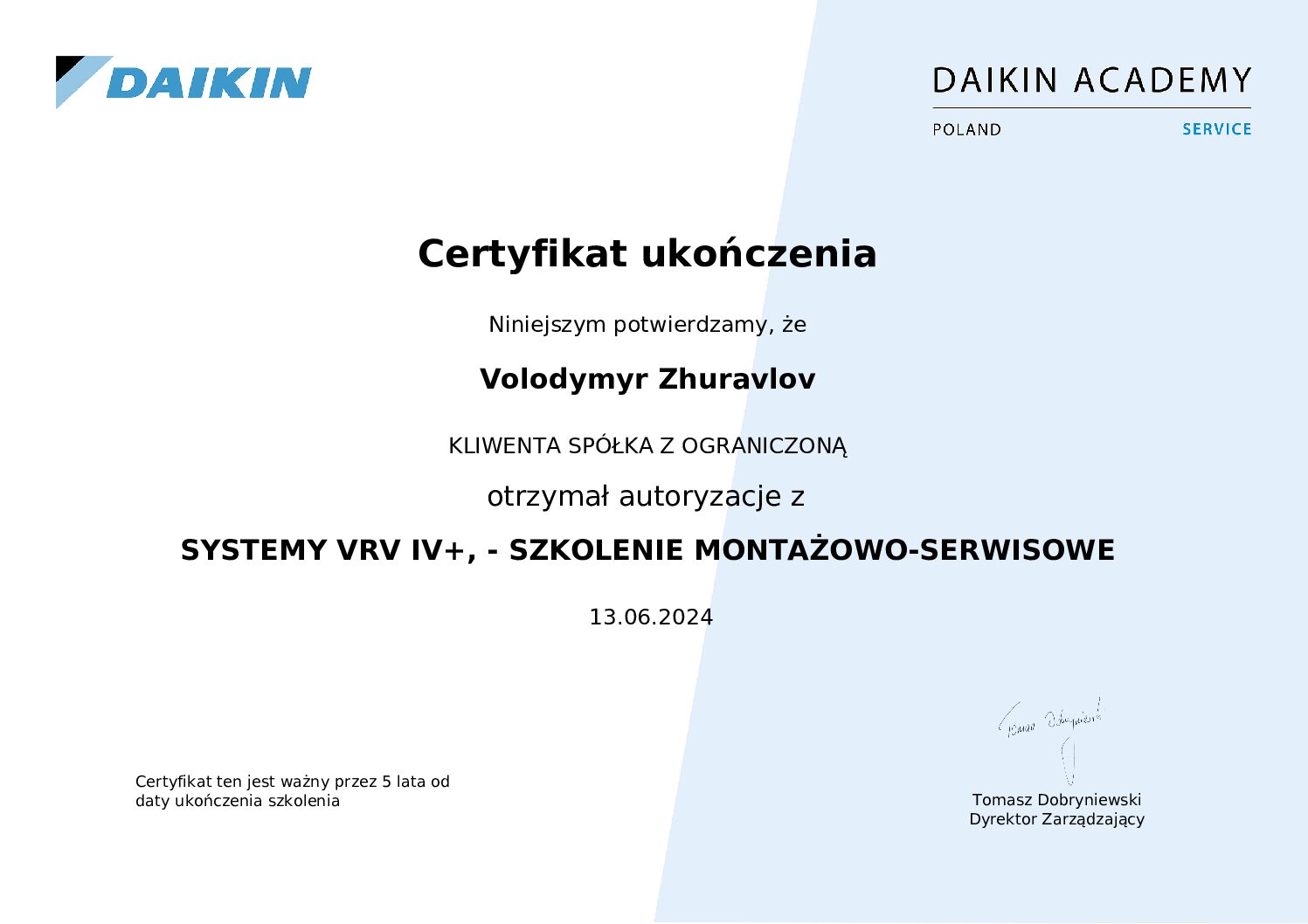
Daikin
VRV IV+ systems · installation & service training
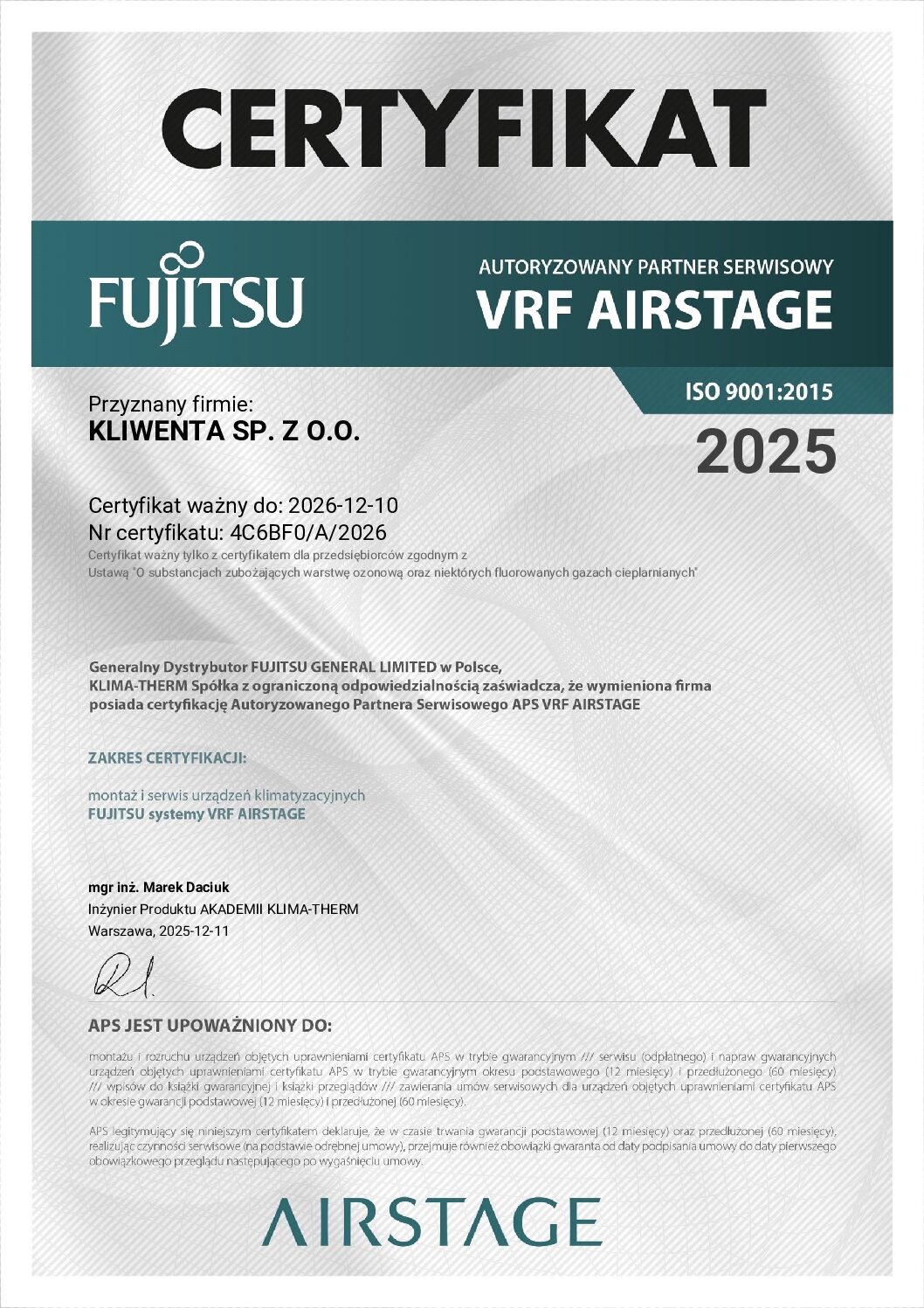
Fujitsu
Authorized VRF Airstage service partner
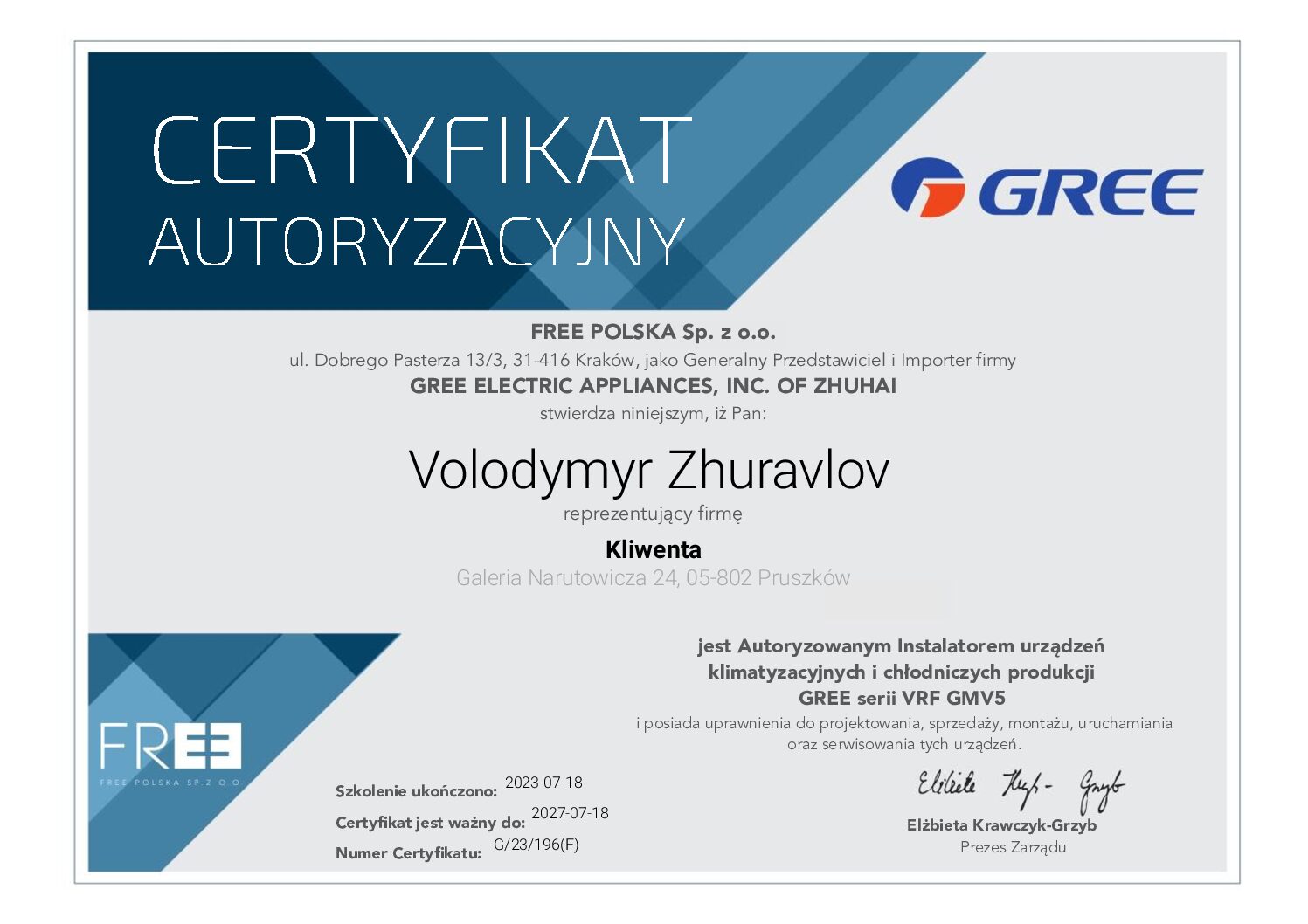
Gree
Gree VRF GMV5
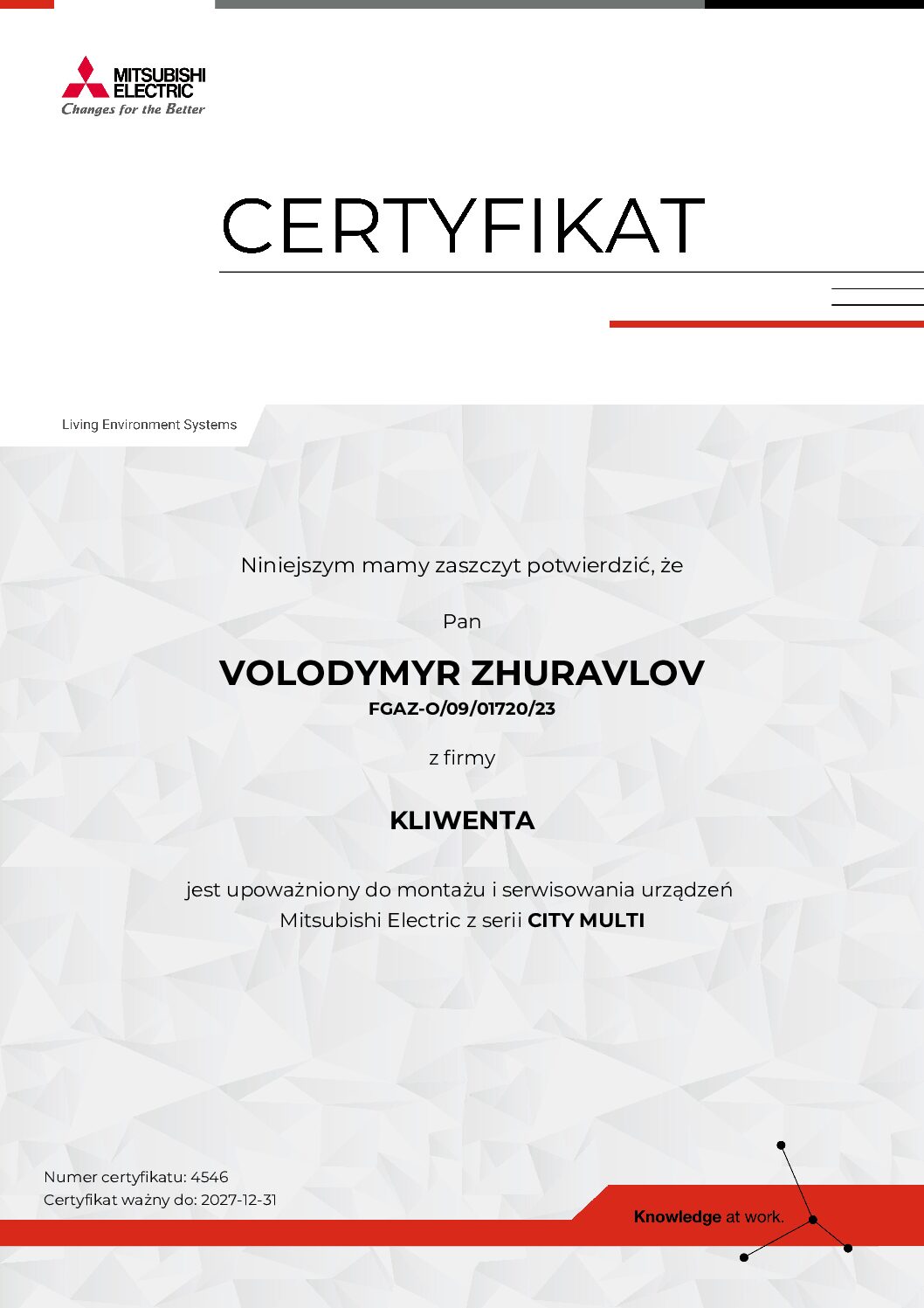
Mitsubishi Electric
City Multi
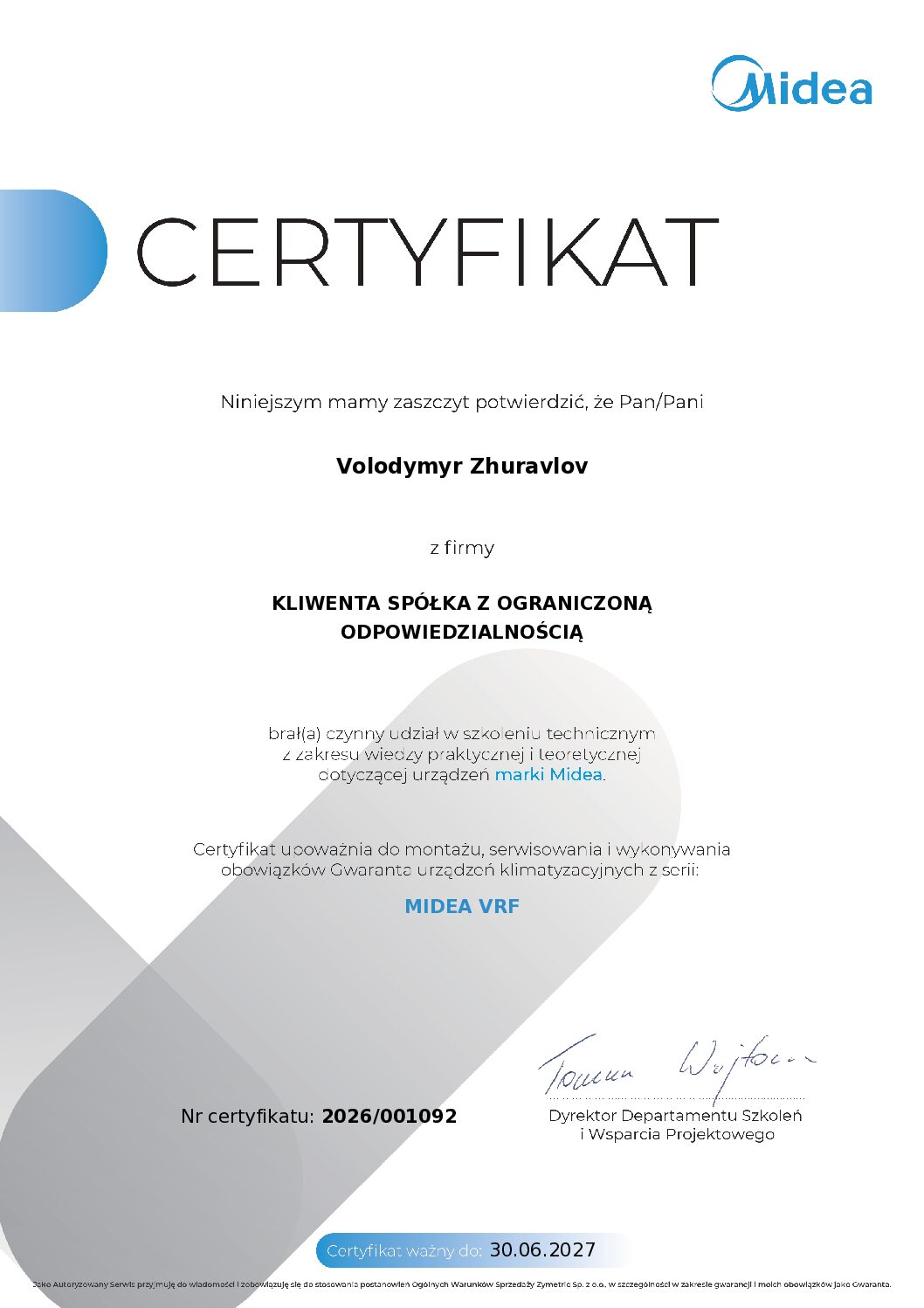
Midea
Midea VRF
Cooper&Hunter
Cooper&Hunter VRF
We also install equipment from other manufacturers, including Cooper&Hunter (certificate currently being renewed).
What’s the Difference Between VRV and VRF?
| VRV | VRF | |
|---|---|---|
| Name & manufacturer | a name trademarked by Daikin | a generic term used by other brands – Mitsubishi Electric, Fujitsu, Gree, Midea |
| Operating principle | variable refrigerant flow | the same mechanism, different brand |
If your building doesn’t require such an extensive system, an alternative could be installing a chiller and fan coil units – we’ll help you choose the right solution for your building.
How Much Does a VRV/VRF Installation Cost?
The price depends on: the number of indoor units, the power of the outdoor unit, the length of refrigerant lines, equipment placement availability, and the level of automation. Below are approximate labor rates (net):
| Item | Unit | Net price (from-to) |
|---|---|---|
| Outdoor VRF/VRV unit installation | per module, depending on power | 1,500-6,000 PLN |
| Cassette indoor unit installation | per unit | 1,200-2,500 PLN |
| Wall-mounted indoor unit installation | per unit | 1,200-2,800 PLN |
| Duct indoor unit installation | per unit | 1,400-3,200 PLN |
| Refnets (VRF branch distributors) | per unit | 300-800 PLN |
| Refrigerant pipe routing | per linear meter | 80-150 PLN |
| Condensate drain pipe installation | per linear meter (gravity) | 50-100 PLN |
| Condensate pump (when gravity drainage isn’t possible) | per unit | 300-900 PLN |
| Nitrogen pressure test | per installation | 500-1,500 PLN |
| System commissioning / start-up | per system | 800-2,300 PLN |
We’ll prepare an exact quote for your building individually – use our technical consulting service to select the optimal system configuration.
Preparation Process
Once a client decides to order a VRV installation (let’s say in Warsaw), the equipment is selected taking into account the specific features of the space and the building as a whole. Based on this, our staff recommend wall-mounted, duct, or cassette air conditioners. In some cases, it’s more suitable to combine several types of air conditioners connected to a single outdoor unit. Equipment selection is part of the broader ventilation and air conditioning design process, which we carry out before installation begins.
Equipment Installation
First, the appropriate locations for the air conditioning equipment are selected, including each individual indoor unit. Technicians then mark the positions and route the lines.
The next step is installing all the equipment, including optimal planning of the drainage system.
Once the air conditioning system is installed, the connection points of its individual components are checked. After the control cabinets are assembled and the equipment connected, the system is started up.
Such a complex task can only be carried out to a high standard by experienced specialists. That’s why our company is a leader in air conditioning equipment. A large team of narrowly specialized experts is ready to complete all tasks set by the client within the agreed time frame. A serious approach, years of experience, and partnerships with the best air conditioning equipment manufacturers are the key to our team’s success.
After installation is complete, we also offer air conditioner service and maintenance, so the system retains full performance throughout its service life. See also our completed VRV/VRF projects.
Frequently Asked Questions
What’s the practical difference between VRV and VRF?
VRV is the name of Daikin’s technology; VRF is the general term for the same type of system used by other manufacturers, such as Mitsubishi Electric, Fujitsu, Gree, or Midea.
Which brands do you install with manufacturer authorization?
We hold current certificates for Daikin (VRV IV+), Fujitsu VRF Airstage, Gree VRF GMV5, Mitsubishi Electric City Multi, and Midea VRF. We also install equipment from other manufacturers.
Do you handle full project delivery?
Yes, we manage the entire process: system design, equipment supply, installation, and warranty service.
How long does a VRV/VRF installation take?
It depends on the scale of the building – from a few days for smaller offices to several months for large facilities.
